Contact dermatitis is one of the most common causes of itchy skin I see in clinical practice.
Several years ago, I saw an older patient who had been battling intensely itchy skin for more than six weeks. His body was red, inflamed, and irritated from nonstop scratching. An urgent care clinic had prescribed a strong course of oral prednisone, and although he felt relief while taking it, his symptoms returned almost immediately after he finished the medication.
He came to my office hoping for another round of steroids, but after taking a careful history, something stood out: he had been using Irish Spring soap every single day for more than 30 years.
He was convinced that couldn’t be the cause because he had been using it for so long.
I explained that yes, absolutely—you can develop an allergy to something you’ve used for decades. Our immune systems are dynamic and constantly adapting. Fragrances in soaps, detergents, and personal care products are a common trigger because those molecules sit on the skin for long periods. Some people are simply more sensitive than others.
After stopping the Irish Spring and switching to a gentle, fragrance-free body wash, his symptoms disappeared within two weeks. This was a classic case of Contact Dermatitis, a skin condition caused by inflammation from something external irritating the skin.
What Is Contact Dermatitis and Why Does it Cause Itchy Skin?
Contact Dermatitis is a type of skin inflammation that happens when your skin reacts to something it touches—such as fragrances, detergents, metals, dyes, plants, or skin-care products.
Common symptoms include:
- Itching
- Redness
- Dry or flaky skin
- Burning or stinging
- A rash that worsens with scratching
Because fragrances are added to nearly everything these days—shampoo, detergent, dish soap, cleaning products, moisturizers—it can be challenging to identify the culprit.
Below are the strategies I teach my patients to help calm inflamed skin and prevent flare-ups.
1. Re-Evaluate What You’re Washing Your Skin With
Cleansers should remove sweat, pollutants, and irritants…not be the irritant.
Look for products that are:
- Fragrance-free
- Dye-free
- Gentle or non-foaming
- Designed for sensitive skin
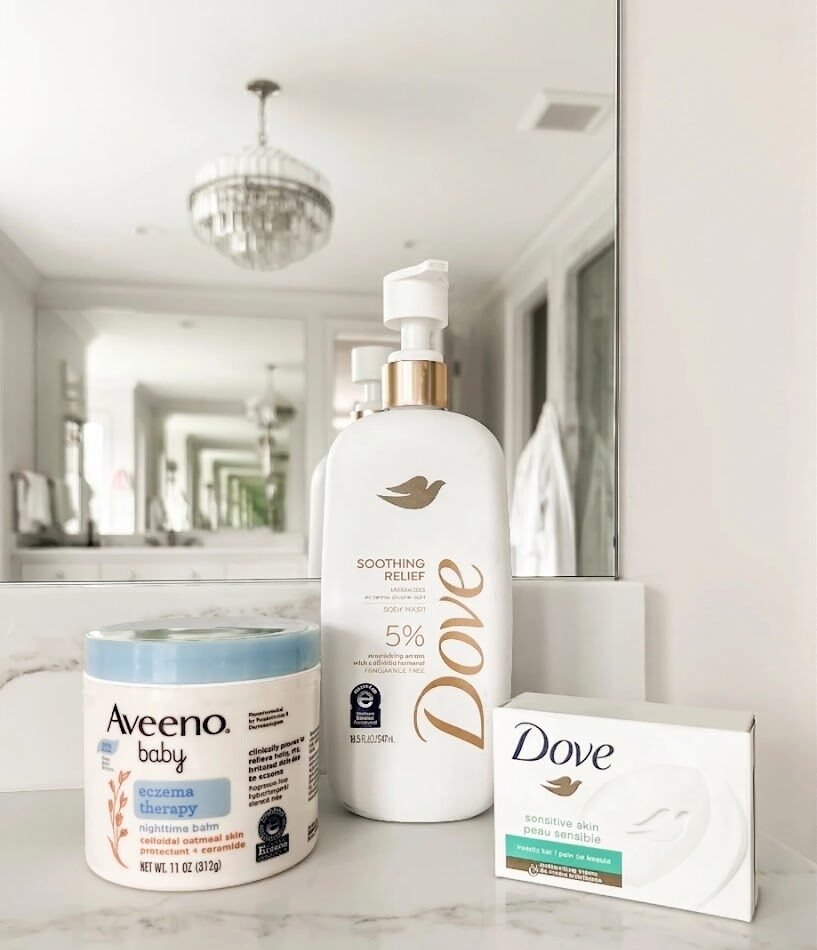
Some great options to consider include gentle, fragrance-free body washes and soaps.


2. Moisturize Quickly — and Choose Thick Creams
Apply moisturizer within 15 minutes after showering to lock in hydration and protect your skin barrier.
When the skin is dry—especially in winter—it becomes more permeable and vulnerable. Irritating molecules can penetrate more easily and trigger an immune response, making itching worse.
Helpful ingredients to look for:
- Ceramides
- Petrolatum
- Hyaluronic acid
- Shea butter


3. Check What You’re Washing Your Clothes With
Your clothes, pajamas, and sheets touch your skin all day and night. If your detergent contains fragrances or dyes, they end up on your skin too.
Choose:
- Free & Clear detergents
- Fragrance-free formulas
- Hypoallergenic options
Today, most brands offer a “Free & Clear” version—usually in a white bottle.


4. Skip Fabric Softener, Scent Boosters & Dryer Sheets
These products are loaded with fragrances and chemicals that commonly trigger contact dermatitis.
I learned this firsthand when I tested a free sample of scent boosters—my kids developed itchy rashes that lasted weeks.
If you’ve used scented laundry products for years:
Wash clothing and bedding with 1 cup of white vinegar in the fabric softener compartment to help remove fragrance buildup.
The vinegar smell disappears after the rinse cycle.
5. Avoid Spraying Perfume or Cologne Directly on Your Skin
If you’re sensitive, avoid spraying fragrance directly on your neck, wrists, or chest.
Instead:
- Spray on clothing layers that don’t directly touch your skin
- Avoid spraying your skin entirely
- Wash hands after applying fragrance
Helpful Relief Strategies While Your Skin Heals
It may take time for your skin to calm down once the irritant is removed.
Try:
- Ice compresses to reduce itching
- Over-the-counter non-sedating antihistamines
- Avoiding scratching (it turns simple irritation into rash)
- Moisturizing twice daily with fragrance-free creams
It often takes a few days to weeks for the skin barrier to fully recover.
When to See a Healthcare Provider
If you’ve removed fragrances, switched to gentle products, and are still experiencing symptoms—or if the rash worsens—it’s important to follow up with a healthcare provider.
You may be dealing with:
- Eczema (atopic dermatitis)
- Psoriasis
- Fungal infection
- Hives
- Allergic contact dermatitis requiring patch testing
Chronic skin issues should not be ignored, especially if they interfere with sleep or quality of life.
Frequently Asked Questions About Contact Dermatitis
How long does contact dermatitis last?
Once the irritant is removed, symptoms usually improve within days, but full skin healing can take 1–3 weeks.
Can you suddenly develop contact dermatitis?
Yes. Even products you’ve used for years—like soap or detergent—can suddenly trigger a reaction due to changes in your immune system.
Is contact dermatitis contagious?
No. It is an inflammatory reaction, not an infection.
Final Thoughts
Itchy skin can be incredibly frustrating, but the solution is often simple:
Remove the irritant, Rebuild the skin barrier, and Avoid scratching.
These are the exact steps I recommend to my own patients, and they work remarkably well when followed consistently.
If you are struggling with itchy skin, know that you’re not alone—and small changes in your routine can make a dramatic difference.
This website is for informational purposes only and is not intended to replace professional medical advice, diagnosis, or treatment. Always consult with your healthcare provider for personalized medical guidance.
Some links on this site are affiliate links. If you click and make a purchase, I may earn a small commission at no extra cost to you.

